
If you’re specifying an industrial PC, lifecycle planning is crucial to get the most out of the installation – and make a future failure faster and easier to deal with.
The call came after the plant had already stopped. A brewery had an industrial PC fail without warning. The machine was running DOS-based SCADA software and controlled part of the production process. When it stopped, the plant could not operate normally. Output slowed, troubleshooting began, and pressure quickly built across operations and management to get the system running again.
When the PC arrived at ESIS, the problem became clear. The hardware platform was obsolete. The motherboard and CPU were no longer available. The system relied on custom industrial I/O cards. The software ran under DOS, which is rarely compatible with modern hardware. There was no direct replacement.
While the plant endured disruption and mounting cost, the only option was to engineer a solution from scratch.
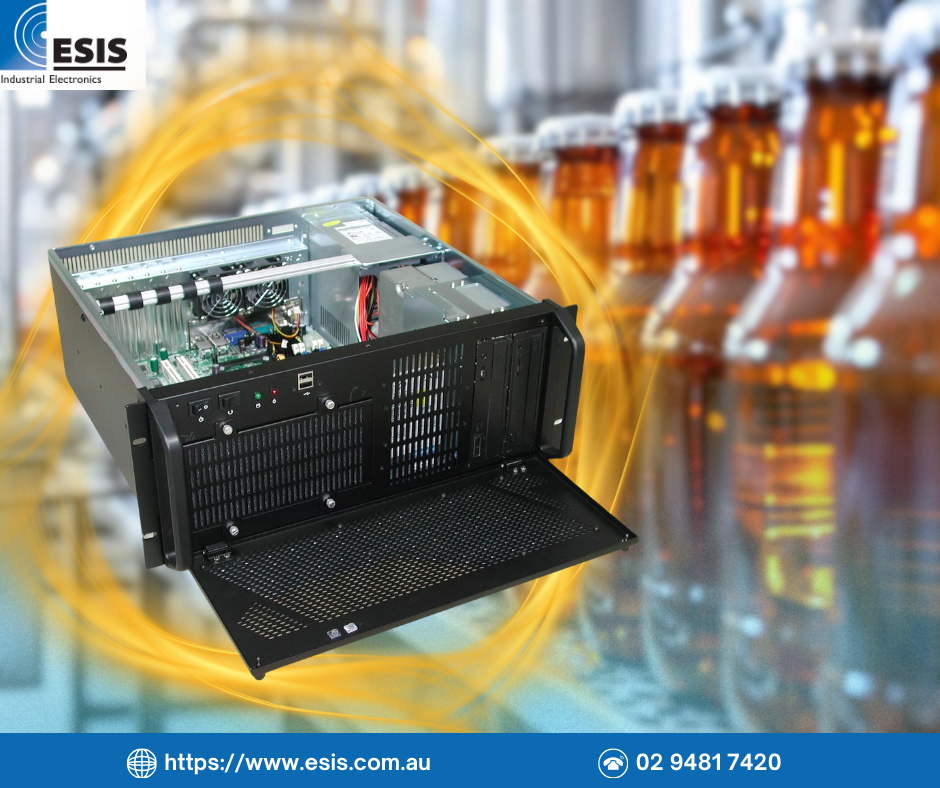
ESIS designed and built a new 4U rackmount industrial PC capable of supporting the original I/O cards and running the legacy software. That required careful BIOS configuration, compatibility tuning for DOS, and extensive testing to ensure the system behaved exactly like the original machine. Only then could it be integrated back into the brewery’s production environment.
The plant was restored, but the recovery demanded significant engineering time and occurred under production pressure. With better lifecycle planning, the disruption could have been minimised.
Reliability is not the same as serviceability
Many industrial PCs run reliably for years. That is often taken as proof that the system design is sound. In reality, reliability alone does not guarantee the system can be repaired or replaced when failure eventually occurs.
Older installations often depend on hardware platforms, operating systems, or expansion cards that are no longer supported or even available. When a critical system fails, the challenge is not simply fixing a fault. It is recreating a system using parts that may no longer exist.
Supply chains aren’t designed for industrial maintenance
Industrial projects operate on long time horizons. Technology supply chains do not.
Chipsets change, expansion buses like PCI disappear, and driver support is withdrawn. Motherboards capable of running older operating systems become scarce. Replacement parts become harder to source and lead times become unpredictable.
A system that was straightforward to replace at commissioning can become difficult or impossible to reproduce ten years later.
Real operating conditions worsen the problem
Industrial environments are harsh. Heat, dust build-up, vibration, humidity and power quality all affect long-term hardware stability. Even well-designed systems degrade faster than expected, particularly where environmental conditions have changed over time.
At the same time, older operating systems introduce cybersecurity exposure, especially when connected to modern networks. Maintaining both operational continuity and security becomes increasingly complex as systems age.
Designing for long-term support
The most serviceable industrial systems are not necessarily the newest. They are the ones designed with maintenance in mind.
How do you eliminate these issues for years into the future? There are several things you can do when you specify an industrial PC:
- Choose up to date hardware with long lifecycle support.
- Choose operating systems with long-term servicing such as Windows 11 IoT LTSC.
- Document configurations thoroughly, including details of why design decisions were made, and how to set up a new PC from scratch to the same specification.
- Preserve the operating system installation media, all drivers, software media and licence keys.
- Include redundant elements in your PC design, such as RAID arrays and redundant power supplies.
- Consider using external I/O hardware that supports industry standards, such as Modbus/TCP remote I/O modules, instead of internal I/O cards such as PCI that may become obsolete.
- Consider whether critical systems require spares to be kept.
These decisions are relatively simple during commissioning. They are far more difficult during an unplanned shutdown.
Planning ahead reduces operational risk
ESIS regularly assists customers recovering from legacy system failures. In many cases, we can engineer compatible replacements, as we did for the brewery. However, the most effective approach is proactive planning before failure occurs.
If you are designing a new installation, upgrading an existing system, or unsure how maintainable your current hardware will be in the future, we can help you assess the risks and plan accordingly.
Send us your requirements and we can help ensure the system you install today can still be supported many years from now.
ESIS Industrial Electronics offers a range of industrial computing solutions, including rugged tablets, data loggers, industrial displays, integrated computing platforms and programmable interfaces for direct PLC integration. Talk to us about your project requirements, and solutions to keep business operations running efficiently.


