
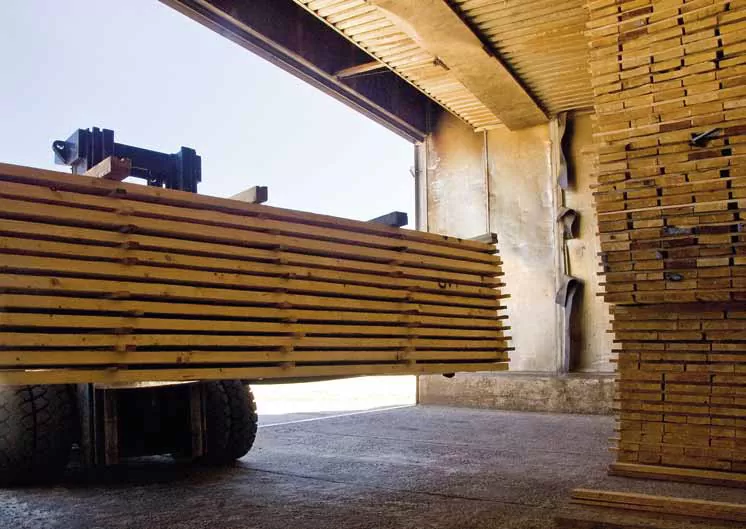
Relative humidity plays an essential role in wood drying, along with time and temperature. Normally these parameters are based on previous drying experience, with the goal being to optimize drying time while minimizing wood cracking. The process parameters are unique to the system used, with different woods and seasonal variations affecting the result. This makes wood drying a very complex process. To achieve the best results, relative humidity needs to be continuously monitored.
Measurement Accuracy Affects Quality and Capacity
The accuracy of relative humidity measurements really matters. It directly affects the quality of the drying process and indirectly affects facility capacity. Inaccurate measurements can cause the following problems:
- If relative humidity is inaccurately shown as too moist, wood may crack due to the overly dry conditions. Over drying also wastes energy and ties up expensive facility capacity unnecessarily.
- If relative humidity is inaccurately shown as too dry, the overly moist conditions will slow the drying process, leading to longer drying times and reduced capacity.
How to Maintain High Measurement Accuracy
Four main factors help to keep measurements accurate: ensuring the sensor is installed correctly, using the appropriate sensor, protecting the probe, and regular calibration.
1. Correct Installation is Essential
A wood drying facility is a very challenging measurement environment, combining high humidity with wood contaminants such as resin fumes. Reliability can be improved by:
- Insulating sensor cables to prevent condensation caused by temperature differences between the drying chamber and ambient conditions. The measurement probe is usually fed through the chamber’s roof – insufficient insulation can result in the formation of condensation, leading to faulty readings and corrosion.
- Ensuring that the measurement probe feedthrough is tight to prevent condensation inside the chamber.
- Shielding the probe from water if it is hanging from the roof. Water can run down the cable or sensor supports directly onto the probe, resulting in inaccurate measurements.
- Protecting the probe from horizontal airflow, which can transfer water and dirt directly onto the sensor.
In one test location, humidity transmitters were re-installed following the guidelines above in order to eliminate installation-related error. Measurement results improved dramatically.
2. Warmed Measurement Probe Minimizes Risk of Condensation
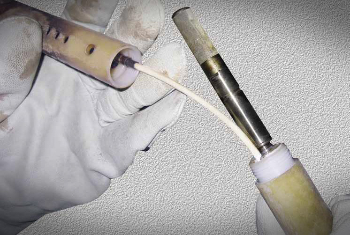
Vaisala’s patented warmed measurement technology is ideal for wood drying facilities. The warming function minimizes the risk of condensation in the probe, thereby enabling fast and accurate measurement results as soon as the drying chamber is loaded.
The sensor material also plays an important role when it comes to long-term stability. In environments where chemicals are present, polymer-based humidity sensors can often indicate lower values than expected due to chemical contamination. The Vaisala HUMICAP®180R sensor can be supplied with an optional chemical purge feature to remove chemical vapor from the sensor. This is done by regularly heating the sensor to a high temperature.
3. Protect the Probe against Drips and Splashes
The Vaisala HUMICAP® Humidity and Temperature Transmitter HMT337 can be equipped with a unique protective cover (HMT330WPA) to prevent any water splashing on the humidity sensor. A dry sensor minimizes measurement response times and eliminates ‘water spikes’, which can disturb measurements.
The cover also protects the sensor filter from dirt, so the filter needs replacing less often. Overall, less maintenance is needed and measurements are more accurate.
4. Annual Calibration Maintains Measurement Accuracy
Relative humidity measurement devices require annual calibration to stay accurate. Making sure your transmitter is correctly installed ensures reliable operation, while an annual check against a reference maintains high-quality measurements. Annual maintenance typically consists of cleaning the probe and replacing the dirty filter.
Humidity transmitters are easy to calibrate on site using the Vaisala Humidity Calibrator HMK15 (based on saturated salt solution). They can also be sent for calibration to Esis.
On-site calibration has the advantage that the transmitter can stay on site, while laboratory calibration is more accurate and always carried out by an expert.
For more information please contact us.
Article courtesy of Vaisala.


