In today’s data-driven world, the ability to accurately capture and analyse information is paramount. Data loggers are the unsung heroes of data collection, playing a pivotal role in a multitude of industries, from industrial manufacturing to transport and logistics.
Let’s explore how data loggers work, the various types and what they can be used for.
How data loggers work
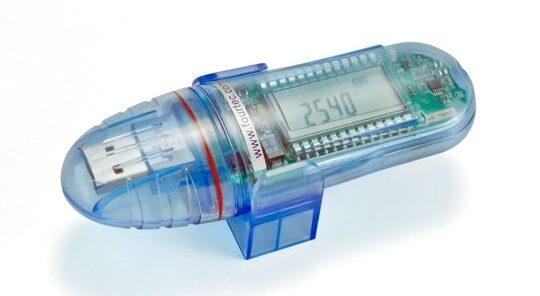
A data logger is a device designed to record data over time or at a specific location. Equipped with various sensors, a processor and a digital memory, data loggers can measure temperature, humidity, pressure, voltage and more, and store the results. They are typically compact, battery-powered and easily deployable in various environments.
Data loggers are made for largely slow signals, such as in conditions that change over a long period of time. Some are intended to monitor for glitches and short circuits. Data loggers can record any electrical or physical property that can be converted to an electrical signal.
Data loggers continuously monitor data from their sensors. They can be programmed to record data at specific intervals, ranging from every few seconds (or even less) to once a day. Once the data is recorded, it can be retrieved and analysed using specialised software. This process provides valuable insights into the conditions or parameters being monitored.
Types of data loggers
There are several types of data loggers, each designed for specific applications:
Temperature data loggers are used to monitor and record temperature levels in various environments, such as laboratories, food storage facilities and shipping containers.
Humidity data loggers measure and record humidity levels, crucial for environments where moisture control is essential, like museums and greenhouses.
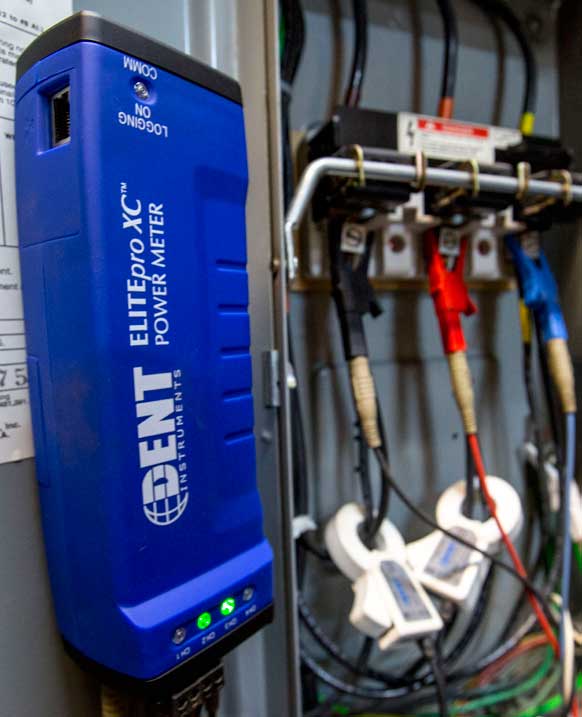
Power data loggers monitor electrical voltages, currents and power usage, and are often used in energy studies and electrical system monitoring.
Pressure data loggers track pressure changes in industrial processes, water systems and atmospheric studies.
Multi-channel data loggers are equipped with multiple sensors to record different parameters simultaneously, providing a comprehensive overview of the monitored conditions.
Weather stations consist of a package of environmental sensors that connect to a data logger, to record the weather.
Applications of data loggers
Data loggers are used in various industries and fields, including in:
Environmental monitoring. Tracking weather conditions, air quality and soil moisture levels for research and conservation efforts.
Industrial manufacturing. Monitoring equipment performance, production processes and environmental conditions to ensure optimal operation and product quality.
Agriculture. Measuring soil moisture, temperature and other parameters to optimise crop growth and irrigation.
Transportation and logistics. Ensuring the safe transport of temperature-sensitive goods, such as food and pharmaceuticals, by monitoring conditions during transit.
Energy management. Tracking energy consumption and environmental conditions to improve energy efficiency and reduce costs.
Choosing the right data logger
It’s essential to choose a data logger with suitable sensors and features for the intended application. Selecting the appropriate data logger depends on several factors, including the specific parameters to be monitored, the required accuracy and resolution, the data storage capacity and the environmental conditions where the logger will be deployed.
Data loggers are vital tools for collecting and analysing data across various fields. By providing accurate and reliable measurements, they enable informed decision-making, enhance operational efficiency and contribute to research and development efforts. Whether it’s monitoring environmental conditions, ensuring product quality, or optimising industrial processes, data loggers are indispensable in our increasingly data-centric world.
As we continue to embrace technology and data-driven solutions, the role of data loggers in capturing and preserving valuable information will only grow more critical. Understanding the basics of data logging and its applications is the first step in harnessing the power of data for better decision-making and improved outcomes. Wondering what the right data logger for you is? Contact Esis today and let our experts help you find the ideal solution tailored to your specific needs.
FAQs
What is a data logger?
A data logger is an electronic device that records data over time or in relation to location, using built-in sensors or external instruments.
How do data loggers work?
Data loggers work by using sensors to measure parameters such as temperature, humidity or pressure. They store this data in internal memory for later retrieval and analysis.
What are the types of data loggers?
Common types include temperature data loggers, humidity data loggers, pressure data loggers, power data loggers and multi-channel data loggers. Weather stations also include a data logger to record the weather measurements.
What are the applications of data loggers?
Data loggers are used in environmental monitoring, industrial manufacturing, agriculture, transportation and logistics and energy management, among other fields.
How do I choose the right data logger?
Choosing a data logger can be tricky, as there are many pitfalls that the average user doesn’t expect. It’s always best to speak to an expert to make sure you buy the best device for your application. Factors to consider include: the parameters you need to measure, the accuracy and resolution required, the data storage capacity, the sampling rate, the duration of the data logging task, the preferred way of downloading and viewing data, and the environmental conditions of the deployment area.
Can data loggers be used for remote monitoring?
Yes, many data loggers are equipped with wireless communication capabilities, allowing for remote monitoring and data retrieval. It’s also becoming more common now for data logging systems to send their data to a cloud server where it is stored, and can be viewed from anywhere via a web browser.
How do I retrieve data from a data logger?
Data can be retrieved via USB, Wi-Fi, Ethernet or other communication methods, and then analysed using specialised software. Most data loggers come with dedicated PC software for configuring the devices and downloading and graphing the data.
Are data loggers expensive?
The cost of data loggers varies depending on their features and capabilities. Basic models can be quite affordable, while more advanced loggers with multiple sensors and communication options may be more expensive. However the initial cost of purchase is often insignificant compared to the savings that can come from properly monitoring your activities. For example by data logging electricity usage in a building, you can often identify power savings that add up to more than the cost of the data logging system.
Interested in finding the ideal data logger for your specific application? Request a quote now and let Esis provide you with a tailored solution that fits your requirements.