
More and more functionalities are being integrated into the same infrastructure in building automation: HVAC, Fire alarms, Access management, Lighting control, Security to name a few. Standardized protocols such as BACnet or Modbus allow for the integration of devices from different vendors into the same system. This makes vendor lock-in a thing of the past. Many systems only use digital communication between high-level devices such as local controllers and continue to use analog signals to communicate with field level devices such as sensors. There are, however, many advantages in using digital communication at all levels, including the sensors.
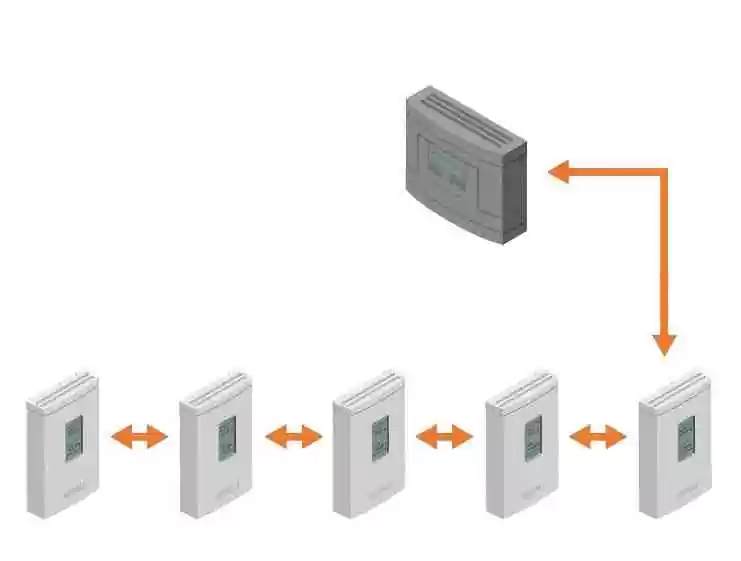
Figure 1. Wiring and expanding the system is easy when using digital sensors. Several addressable sensors can be chained on a signal bus. Communication is bi-directional from sensor to system and system to sensor.
Easy wiring
Wiring digital sensors is easy as several addressable sensors can be chained on a signal bus (Figure 1). Instead of 1-2 wires per each measurement point with analog instruments (Figure 2), only 4-5 wires are needed for up to dozens of measurement points. Moreover, expanding an existing system is easily done by extending the existing sensor bus lines. New wiring may not be needed all the way from the new sensor to the area controller. The easiness of wiring is further emphasized in sensors that measure several parameters, such as combination instruments for carbon dioxide, humidity, and temperature.
Easy setup
Sensor setup is easy when using standardized digital protocols such as BACnet. Sensors can be accessed using generic tools. It is easy to set the measurement parameters such as site elevation or pressure. Selecting the most appropriate humidity parameter for the application is just a matter of selecting which instance of the humidity object should be read.
Easy maintenance
Sensor diagnostics are centrally accessible when using digital communication at the sensor level. This enables timely sensor maintenance and guarantees quality measurements throughout the sensor lifetime.
Accurate measurements save energy
The measured data travels uncorrupted all the way from the sensor to the controller when using digital communication. In comparison, conventional analog signals introduce additional uncertainty that results from wiring resistances, accuracies of shunt resistors, and input boards in controllers. The digital measurements of modern sensors make it possible to get rid of two sets of additional uncertainty: converting the digital measurement to an analog signal and converting it back to digital information in the controller.
Driving the 4 to 20mA current signals of analog instruments consume a lot of energy. Not only is this visible in the electricity bill, but it can actually corrupt temperature and humidity measurements. Wall sensors are especially prone to heating. Without careful thermal design these analog instruments may indeed measure temperature accurately; however they will not measure the actual temperature in the room but rather the increased temperature of the sensor itself. By using digital communication, the power consumption of the transmitter is reduced and the true room temperature and humidity can be measured accurately without these sensor heating effects.
With digitally transmitted carbon dioxide, humidity and temperature measurements, demand controlled ventilation (DCV) can be used to its fullest saving potential.
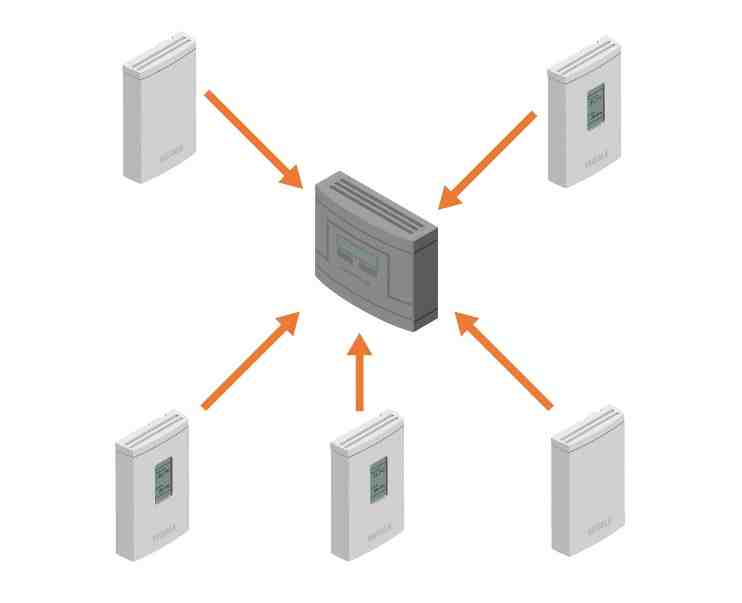
Figure 2. Each sensor requires separate wiring when using analog sensors. Communication is one-way from sensor to system only.
BACnet in Brief
- A data communication protocol for Building Automation and Control networks
- Used in management, automation, and field-level communication
- ANSI, ISO, and ASHRAE standard protocol
- Adds flexibility by allowing the integration of products and systems from different manufacturers
For more information please contact us.
(Article courtesy of Vaisala)


