Data helps us make decisions, understand trends and improve systems. But how do we gather this valuable data? Whether it’s monitoring environmental conditions, tracking the performance of industrial machinery or ensuring the quality of perishable goods, data loggers play a crucial role.

What is a data logger?
A data logger is an electronic device that records data over time. It typically consists of a sensor, a microprocessor and internal memory for data storage. Data loggers can be stand-alone devices or part of a larger system and are used in various applications, including for environmental monitoring, industrial process control and supply chain management.
Stand-alone data loggers are ideal for if you don’t need the data right away. Most can be set up to read data in intervals for months at a time. Once the job is done, the data logger is retrieved and the data can be downloaded into a computer for viewing and analysis.
Networked and wireless data loggers are well suited for permanent installation, and allow data or alarms to be transmitted immediately.
Types of data loggers
Data loggers come in various shapes and sizes, each designed for specific applications. Here are some common types
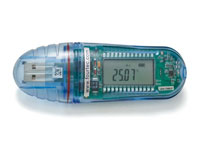

Environmental data loggers and weather stations are used to track environmental parameters such as air quality, water quality, weather parameters and soil moisture. They are essential tools in environmental research, agriculture and natural resource management.

- Structural health monitoring (SHM) loggers
SHM loggers are used in civil engineering to monitor the health of structures like bridges, buildings, and dams. They can measure parameters such as strain, vibration, and displacement.
- Vehicle data loggers
These devices are used in automotive testing and fleet management. They can record parameters such as speed, acceleration, GPS location and fuel consumption.
Features and benefits of data loggers
Different types of data loggers offer various features and benefits:
Accuracy and precision

Long-term monitoring
Many data loggers are designed for long-term deployment, with battery lives extending for several years.
Remote data access
Some data loggers offer wireless connectivity, allowing for remote data access and real-time monitoring. Modern IoT based devices can take this a step further and send their measurements directly to a cloud service, providing easy viewing and retrieval of the data in real time from a cloud dashboard.
Robustness
Ease of use
Modern data loggers feature user-friendly interfaces, making it easy to configure settings and analyse data.
Scalability
Data loggers can be designed to monitor a single point or a network of sensors, covering a wide variety of applications.
Limitations of data loggers
While data loggers offer numerous benefits, they also have some limitations:
Cost
High-quality, feature-rich data loggers can be expensive, which may be a barrier for small-scale operations.
Complexity
Some data loggers require technical expertise to set up and interpret data, which may not be feasible for all users. In addition, to make proper use of the recorded data, it’s important to have a good understanding of the scientific principles behind the process being measured.
Maintenance
Like any electronic device, data loggers require regular maintenance to ensure accuracy and longevity. This includes regular cleaning and calibration of sensors, replacing batteries, and unloading recorded data before the memory fills up.
Data overload
Collecting excessive amounts of detailed data can lead to information overload, making it challenging to extract meaningful insights.
Choosing the right data logger
When selecting a data logger, it’s essential to consider the specific requirements of your application. Factors to consider include:
- The ultimate aim of your data logging project, ie. define the information and results you need.
- Physical parameters you need to measure, eg. temperature, humidity, electrical current – and how many of each sensor you’ll need.
- Range of measurement you can expect – eg. temperature will be between -25 and 0 degrees in a freezer.
- How often the logger should take measurements – this will depend on how quickly the physical parameters are likely to change.
- The required accuracy to achieve the overall goal. Specifying excessively high accuracy will increase the cost of the equipment.
- The environmental conditions the sensors and data logger will be exposed to.
- The method of accessing the recorded data – will a person visit the logger and connect a laptop to download data? If so, how often? Or do you need the logger to be equipped with wireless communications, to enable remote access or sending data to the cloud?
- The available budget.
It’s also important to choose a data logger with a user-friendly interface and reliable support.
Data loggers are indispensable tools in various fields, offering the ability to collect accurate and reliable data over time. Understanding the different types of data loggers, their features, benefits and limitations, is crucial in selecting the right device for your needs. Whether you’re monitoring environmental conditions, industrial processes, or vehicle performance, there’s a data logger out there that can meet your requirements.
However, given the considerations and the inherent technical complexity of data logging, it’s wise to talk to a data logger supplier who has a solid reputation, real world experience and a good product range, for advice on choosing the best data logging solution. Without getting the right advice, it’s easy to end up with a failed data logging project due to technical subtleties, pitfalls and misunderstandings.
Optimise your data logging project with Esis! Reach out to our experts to find the right data logger for your needs.
FAQs
What is a data logger?
A data logger is an electronic device that records data over time, using sensors and a microprocessor. It’s commonly used in various applications for accurate and reliable data collection.
What are the different types of data loggers?
Common types of data loggers include temperature and humidity loggers, electrical power loggers, environmental data loggers, general purpose data loggers, structural health monitoring loggers, and vehicle data loggers, each designed for specific applications.
How do data loggers work?
Data loggers work by using sensors to collect data, which is then stored in internal memory. This data can be later retrieved for analysis. Some data loggers also offer real-time monitoring via wireless connectivity.
What are the benefits of using a data logger?
Data loggers offer accurate and precise measurements, long-term monitoring, remote data access, robustness, ease of use and scalability, making them essential tools for various fields.
What are the limitations of data loggers?
Limitations of data loggers include cost, complexity, maintenance requirements and the potential for data overload, which can make it challenging to extract meaningful insights.
How do I choose the right data logger for my application?
When selecting a data logger, consider the type of data to be collected, the desired accuracy, environmental conditions, budget, user interface and support options to ensure it meets your specific needs. It’s always best to speak with an expert from a reputable supplier who specialises in data loggers, to make sure you’re buying the best data logger for your application.
Can data loggers be used for long-term monitoring?
Yes, many data loggers are designed for long-term deployment, with battery lives extending up to several years, making them ideal for continuous monitoring applications.
Are data loggers easy to use?
Modern data loggers often feature user-friendly interfaces, making it easy to configure settings and analyse data. However, some may require technical expertise for set up and interpretation of data.
What’s the difference between data loggers and data recorders?
Data loggers are often confused with data recorders but there is a subtle difference. The term data logger refers to modern data logging devices with sensor inputs and digital memory, and the ability to transfer measured data to a computer. The term data recorder was more commonly used for chart recorders, which is an older technology that draws lines (as a continuous graph of the measurements) onto a roll of paper chart. Both are used commonly in scientific and industrial applications, but chart recorders are being phased out in favour of data loggers.
Explore our extensive range of data loggers at Esis. Talk to us and we’ll help you find the perfect one that fits your needs. Contact us here.


