
Monitoring food safety, quality and shelf life is vital for any business in the food industry. From grocery stores and convenience stores to fast food chains, restaurants and catering companies, consumers must have confidence that the food and beverages they purchase will be safe from contaminants, including disease-causing bacteria.
Refrigerated and frozen foods must be maintained at specific temperature levels at all times. If there are variances in the temperatures, they must not exceed certain levels, or else the food could become contaminated.

What is the food industry’s view on monitoring?
The food industry is a trillion-dollar industry when you factor in all operations, from food production and manufacturing to the end products purchased by consumers at their favorite restaurants and grocery stores. Anytime an outbreak occurs, it hurts consumers and consumer confidence. Brands face potential lawsuits, further tarnishing their image.
As such, businesses at every level of the industry are concerned about food safety and take steps to reduce the risk of contamination and food-borne illness outbreaks. While each operation may utilise different food safety monitoring methods, they are in agreement about setting appropriate safety and quality standards to maintain consistency.
How does monitoring help ensure safety and quality?
Food safety monitoring helps ensure safety, quality and shelf life by requiring that food, as finished goods or as in process or raw material, will be handled in specific ways. Monitoring processes should include those such as data loggers that track and identify potential issues and concerns.
For example, restaurant coolers and freezers need ongoing temperature monitoring. These solutions must alert employees when a freezer or cooler temperature falls outside the safe operating zone.
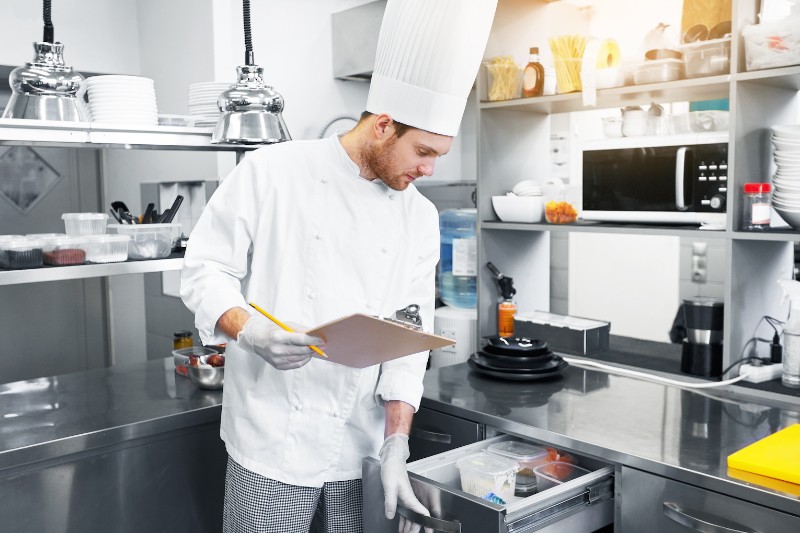
Food should also be stored to prevent cross-contamination. For instance, raw chicken should be stored separately from other meats, and any containers should be washed and sanitised before being reused. Cooked foods should also be stored in a different area from raw foods.
The benefits of data loggers for maintaining food safety
The right monitoring solutions offer benefits including:
- Makes collecting data easier.
- Stores data track.
- Offers the ability to convert data into customised reports.
- Helps businesses comply with specific federal, state and local regulations.
- Makes it easier to track the source of potential outbreaks before they occur.
- Reduces the potential for human error.
Fourtec offers HACCP-compliant (hazard analysis and critical control points) data loggers for keeping food safe. Fourtec solutions suit various food-related applications including in food laboratories, production floors, supermarkets, pasteurisation, refrigeration, storage and shipping, supermarkets restaurants and catering companies and hotels, while complying with FDA and CFR Part 11 regulations.
ESIS is the leading supplier of outstanding industrial electronic equipment in the Australian market since 1971. Check out our exclusive range of Fanless PCs, Industrial PCs (IPC solutions), Rugged Tablets, HMIs, Panel PCs and other electronic components. Our products are certified and made with high-quality custom materials for accurate results. Contact us for a detailed product catalogue or to share your queries.
Article courtesy of Fourtec.


